

Running an NBFC is not just about Loan Disbursement and Recovery. It is also about Strict Compliance with RBI guidelines. The Reserve Bank of India (RBI) sets rules to ensure Financial Stability, Protect Borrowers, and Maintain Transparency in NBFC operations.
Non-compliance can lead to penalties, restrictions, or even cancellation of NBFC license.

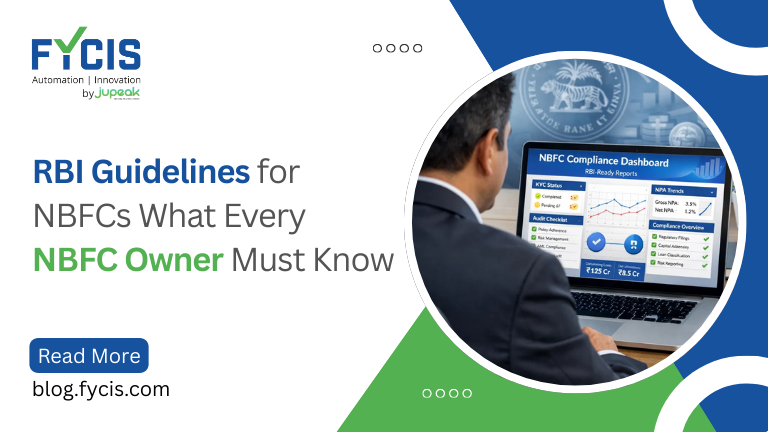
This blog explains the key RBI requirements in a simple way and how NBFCs can manage them easily.
Why RBI Compliance Is Important for NBFCs
RBI regulations are designed to:
- Protect Borrowers from unfair practices
- Reduce Financial Risk in the system
- Ensure NBFCs maintain healthy Loan portfolios
- Improve Transparency and Reporting
For NBFC owners, compliance builds trust, credibility, and long-term Business stability.
Key RBI Guidelines Every NBFC Should Follow
Proper KYC and Customer Due Diligence
RBI mandates strict Know Your Customer (KYC) norms. NBFCs must:
- Verify Borrower identity and address
- Maintain updated KYC Records
- Avoid lending to high-risk or fake profiles
Poor KYC increases fraud risk and NPAs.
Fair Lending Practices
NBFCs must follow fair practices code, including:
- Transparent Interest Rates
- Clear loan terms and conditions
- No hidden charges
- Respectful Recovery process
Unfair practices can result in Customer Complaints and RBI action.
Timely and Accurate Reporting
NBFCs are required to submit regular reports such as:
- Financial Statements
- NPA Data
- Asset classification reports
- Statutory Returns
Manual reporting increases chances of errors and delays, which RBI closely monitors.
NPA Recognition and Provisioning
RBI has clear rules on:
- When a Loan becomes NPA
- How to Classify Assets
- How much provision to maintain
Delayed or incorrect NPA recognition can seriously impact audit results and RBI inspections.
Data Security and Record Maintenance
NBFCs must maintain:
- Secure Customer Data
- Controlled user access
- Proper Digital Records
Data leakage or loss is treated as a serious compliance failure.
Common RBI Compliance Challenges Faced by NBFCs
Many NBFCs struggle because of:
- Manual record keeping
- Data scattered across branches
- Dependency on Excel
- Delayed MIS generation
- No real-time visibility of operations
These issues increase the risk of non-compliance and penalties.
How NBFCs Can Simplify RBI Compliance
The best way to stay compliant is to systemize operations. An NBFC Management Software helps by:
- Centralizing all customer and loan data
- Auto-generating RBI-ready reports
- Tracking NPAs in real time
- Maintaining Audit-ready Records
- Reducing Human errors
Automation ensures accuracy, consistency, and timely reporting.
Compliance Is a Business Strength
RBI compliance should not be seen as a burden. When followed correctly, it:
- Improves operational discipline
- Builds lender credibility
- Reduces financial and legal risk
- Supports long-term NBFC growth
NBFCs that invest in strong systems and transparent processes are always better prepared for RBI audits and future expansion.
Staying compliant today means staying safe, trusted, and profitable tomorrow.
Digitalisation Makes RBI Compliance Easier
RBI Guidelines for NBFCs: What Every NBFC Owner Must Know. In today’s time, Digitalisation itself reduces Non-Compliance risk. When Data is stored centrally, reports are generated easily, and records are always updated, the chances of manual errors, delays, and missed RBI requirements become very low.
A digital system helps NBFCs stay Audit-ready, Transparent, and RBI-compliant at all times.
This is where FYCIS comes in. FYCIS is a complete NBFC Management Software designed to simplify compliance and daily operations.
FYCIS helps NBFCs manage everything on One Secure Platform. Already trusted by 200+ NBFC clients, FYCIS has proven its reliability, accuracy, and compliance strength.
Take the smart step towards stress-free compliance.
Book your FYCIS Demo Today and run your NBFC with confidence!
Call us at – 7080814044


